STEVE'S MEDS (2024)
STEVE'S MEDS was recorded at my late-brother Steve's Toronto home on New Years Day 1992. It was transferred to digital and completed it in 2024.
I knew Steve had to take a battery of drugs to keep himself going as an HIV positive man living with AIDS. I also knew that my brother always took a diligent approach to anything he was doing, so I figured he'd know quite a bit about the drugs he was taking. By the time I made this video, he'd been reliant on various pharmaceutical since the mid-1980s. Even though we were close, Steve didn't tell me he was HIV positive until he became quite ill.
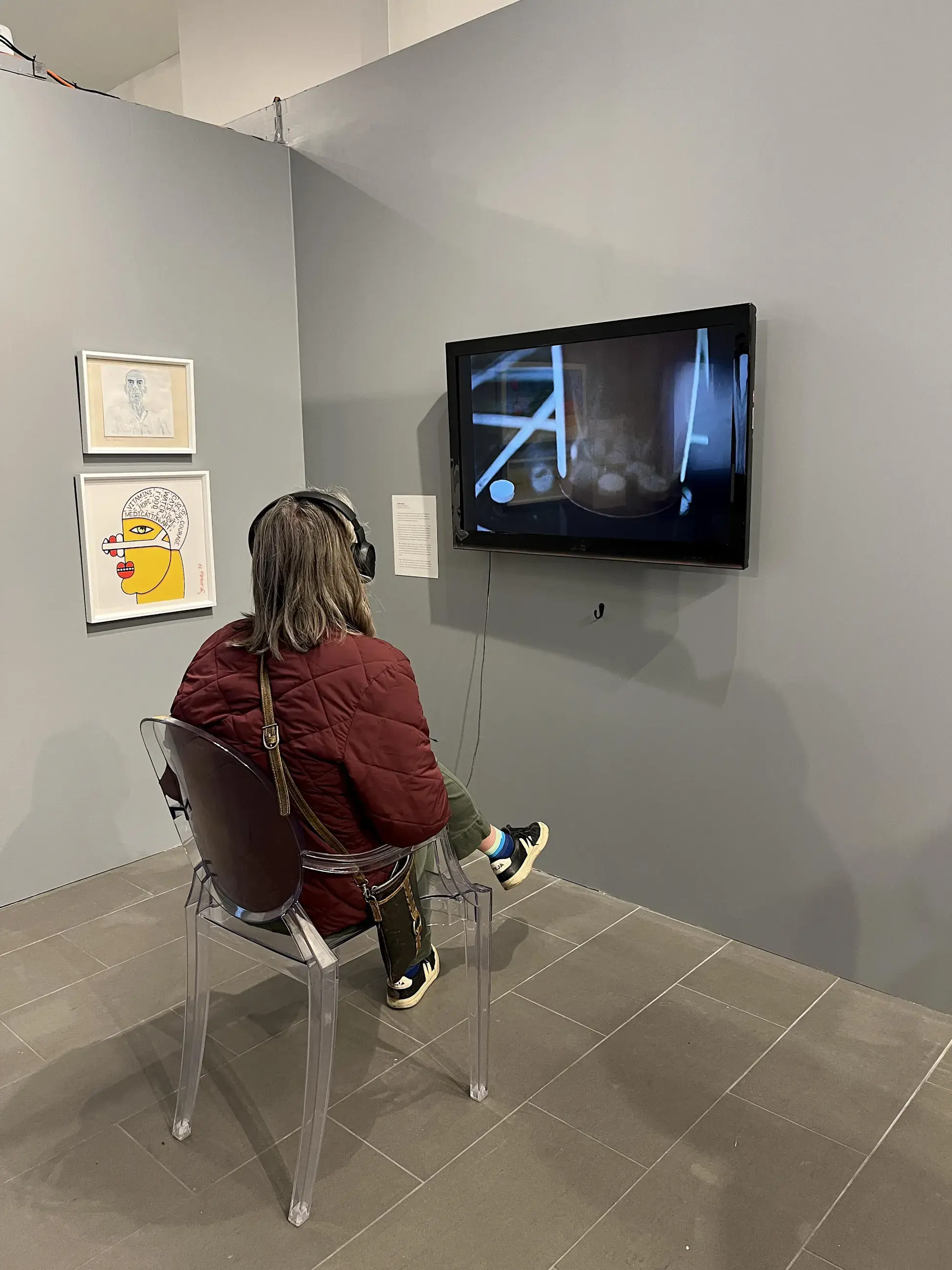
The video begins the morning after his New Years eve party and a pan across piles of dishes from the evenings festivities briefly set the scene surrounding our interview. The film then cuts to Steve and I in his bathroom where he kept all his medications. It was a beautiful, spacious room with lots of black shiny tiles, so I thought it would make a good location for the work. As Steve prepares the "set" by wiping down the countertop, our sibling banter fills the room. However, as soon as he starts describing his meds, his tone switches to that of a clinician or an expert on the topic, which he was. Steve then goes through his medications, one at a time, noting their name, purpose and the dosage he was taking. The video finishes with my question of how much his meds cost, which was a lot.
In the swirl of everything that was going on at the time for me with Steve's illness I don't think I recognized the poignancy of what I'd recorded. Nonetheless, I carefully stored this tape. It was only when I was reviewing all the raw footage that I'd shot in the late 1980's and early '90s that I rediscovered it. Looking back on it now, I think there is additional value to this recording as a document of a time when so many HIV positive people were struggling for their lives, when antiretroviral drugs were fresh on the market and largely of limited accessibility.
The title for this work came easily to me because it makes a partner to my work Steve's Vinyl, a performance and give-away of Steve's record collection organized to coincide with World AIDS Day (Dec 3, 2011).
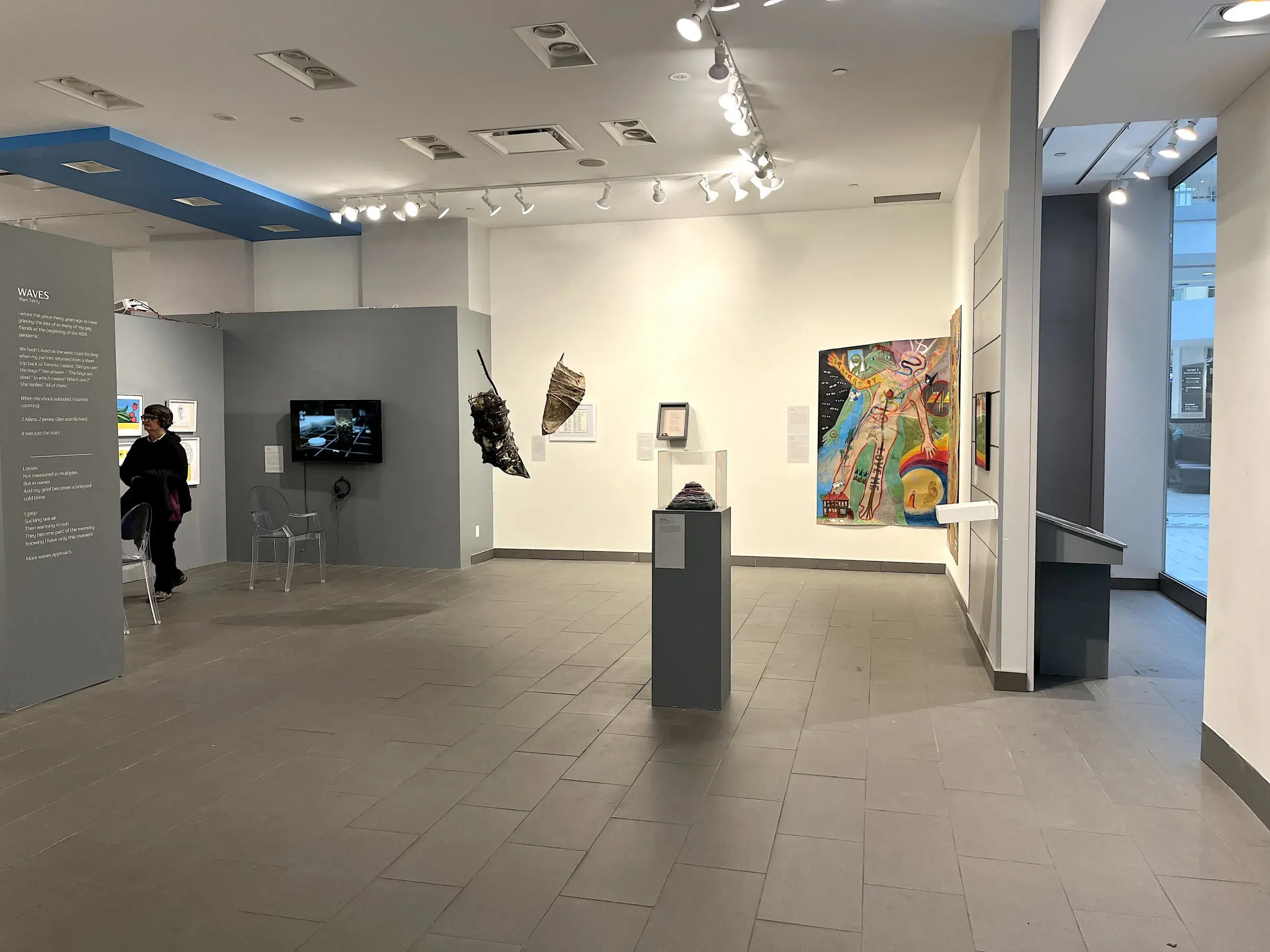
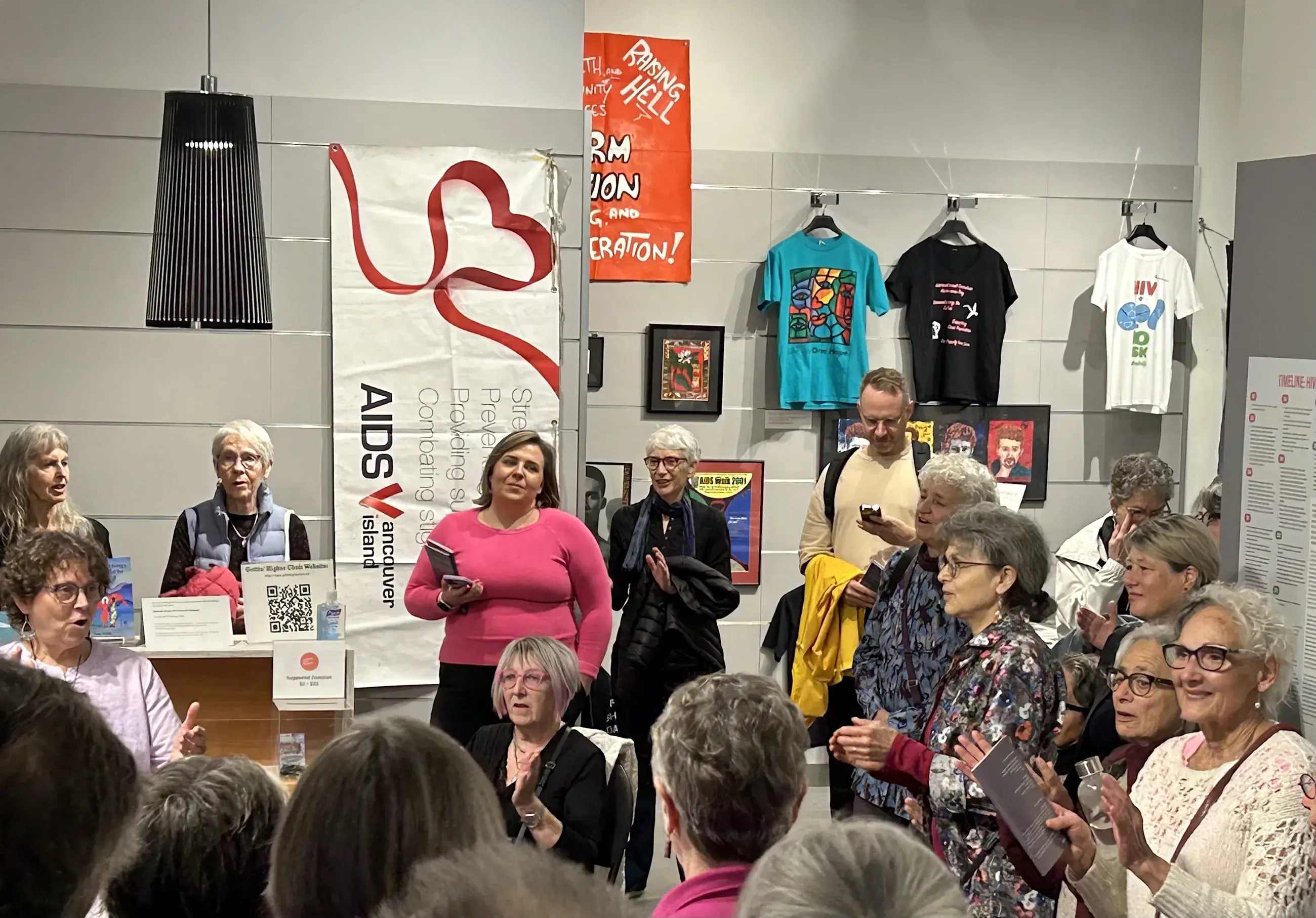
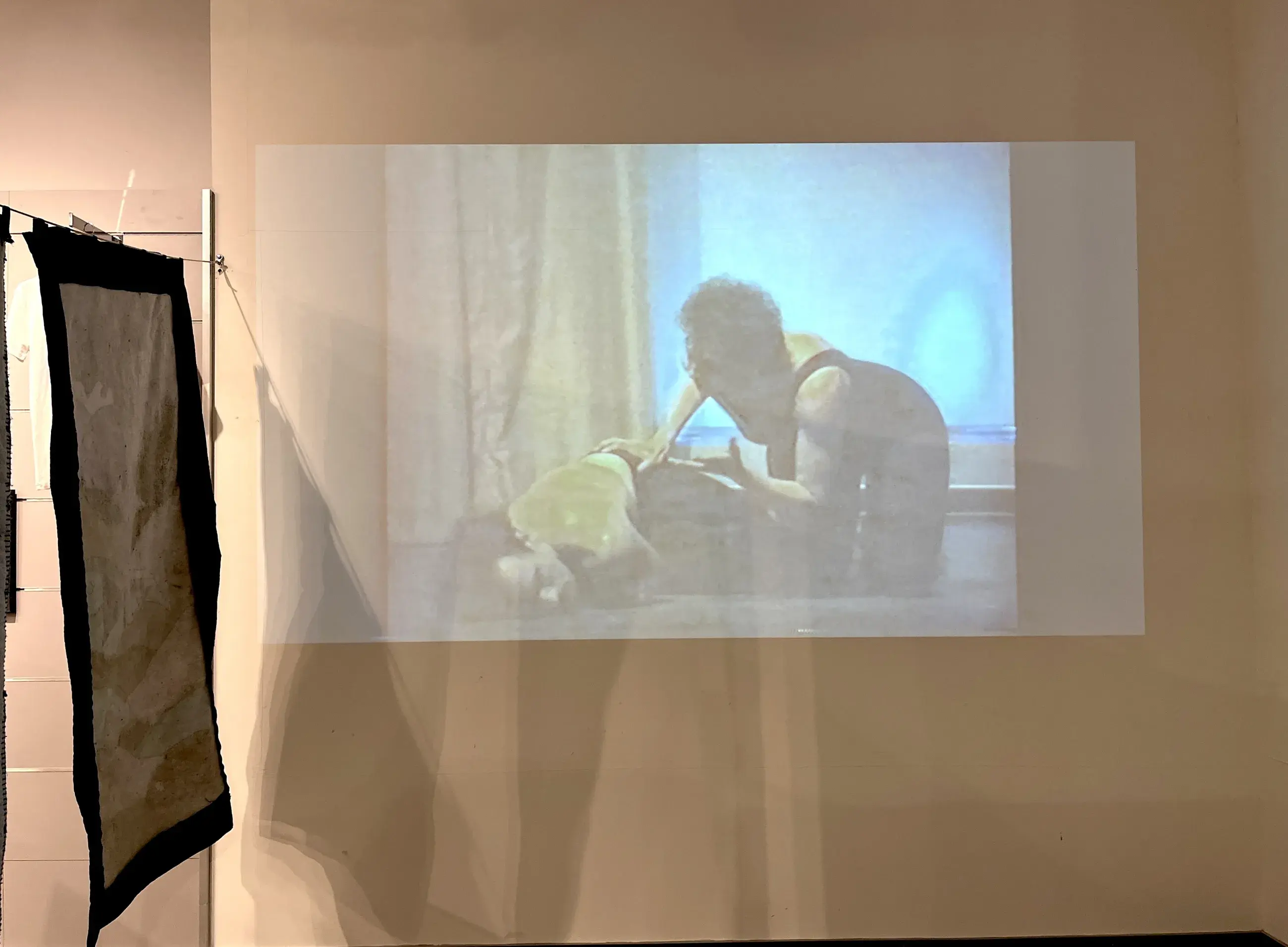
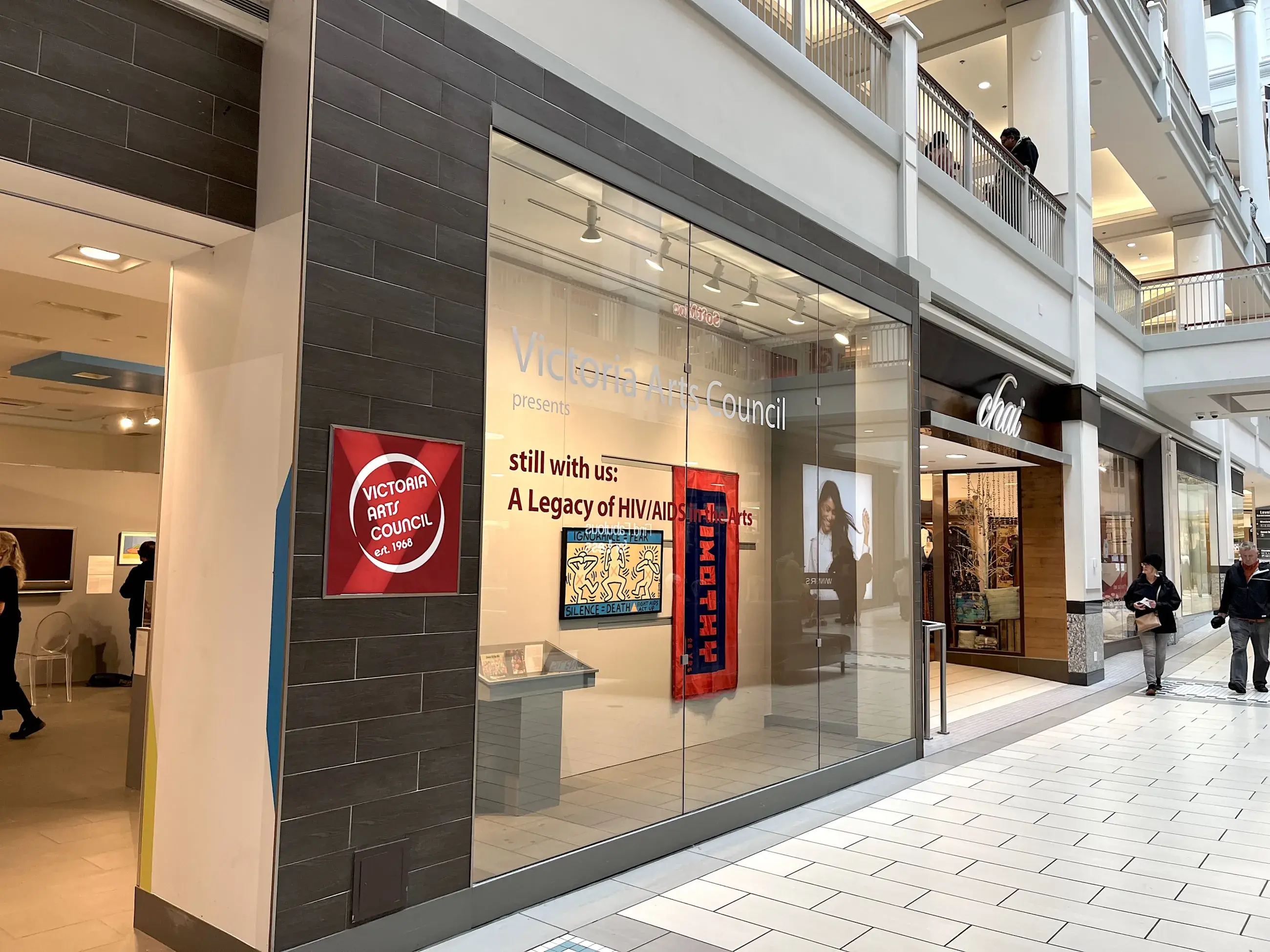
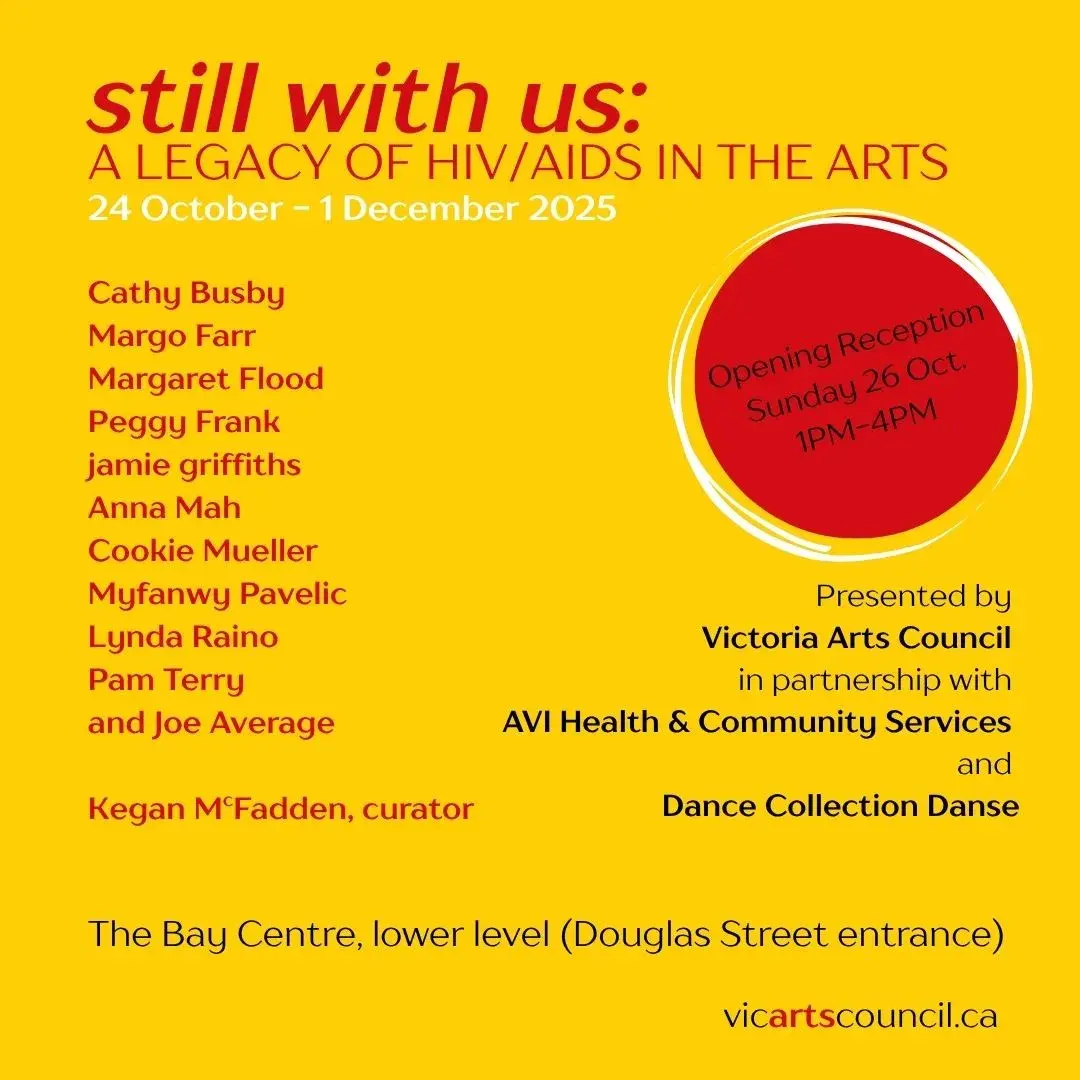
STEVE'S MEDS was exhibited in still with us: A Legacy of HIV/AIDS in the Arts (Victoria Arts Council, Victoria, BC, Oct 24 - Dec 1, 2025) along side the work of 11 other artists. This exhibition was done in collaboration with HIV/AIDS service organizations and also features archival documents on the overlapping histories of AIDS activism with dance, theatre and music. In his exhibition text, curator Kegan McFadden expanded on the context from which STEVE'S MEDS arose:
"The family ties extend to Cathy Busby's video work, Steve's Meds (1992/2024). Shot on New Year's Day, Busby's handheld documentary-style video focuses exclusively on the medication regimen that her brother Steve follows to maintain his viral load as well as the various related complications due to his HIV+ status and/or the treatment. You hear Steve's voice first listing the medical name of the pharmaceutical, its intended purpose, and at times its side effects, while he places the pills on the countertop next to his bathroom sink (a sort of show and tell). At the time this was a new frontier for patients living with HIV/AIDS, with no clear road map. People like Steve contributed vital information for the medical community to ascertain what was working and what wasn't as the death tool mounted.
The use of video to document and advocate for people living with AIDS by practitioners like Gregg Bordowitz, Ray Navarro, Marlon Riggs, Ellen Spiro, Jim Hubbard (among numerous others, including AIDS Activist Video, an informal collective of artists working from 1985-2000, the collection of which is now housed in the New York Public Archives), was predicated upon 'the deadly, inadequate government response and the meager and antagonistic reporting of the mainstream media. These videomakers felt compelled to tell the real story of AIDS from the point of view of people with AIDS. The tapes portrayed People With AIDS as neither victims nor pariahs, but as empowered activists taking charge of their health in both the political and medical arenas. This was not the whole story, but it served as a necessary counterpoint to the relentlessly negative depiction by the mainstream media.'
After videotaping Steve's accounting of his meds, Cathy put the footage away for decades, only vaguely remembering it, until she rediscovered it, and eagerly completed this work. Now, thirty-two years later, it feels personally and socially timely to present it publicly in light of how much has changed for HIV/AIDS-compromised people. This video is a compendium to a performance/installation—Steve's Vinyl (2011)—where Cathy ceremoniously displayed the record collection left to her upon her brother's AIDS-related death in 1993. For fifteen years, she carried around crates of music the siblings had bonded over, across different cities as she embarked on her career, completed advanced degrees, and fell in love. She turned this weight from something to carry into a gift—something that could be given away, shared. Similarly, Steve's Meds becomes a fulcrum, where the intimate conversation about care between brother and sister is now an educational document—less so about medicine than what it means to be with someone fully; to afford them strength in vulnerability, to show up."